
Your Dream Job Awaits as a Professional Home Food Tester
Get Paid to Eat: How to Become a Food Product Tester at Home
Becoming a food product tester at home is a real, paid opportunity — and it’s simpler to start than you might think.
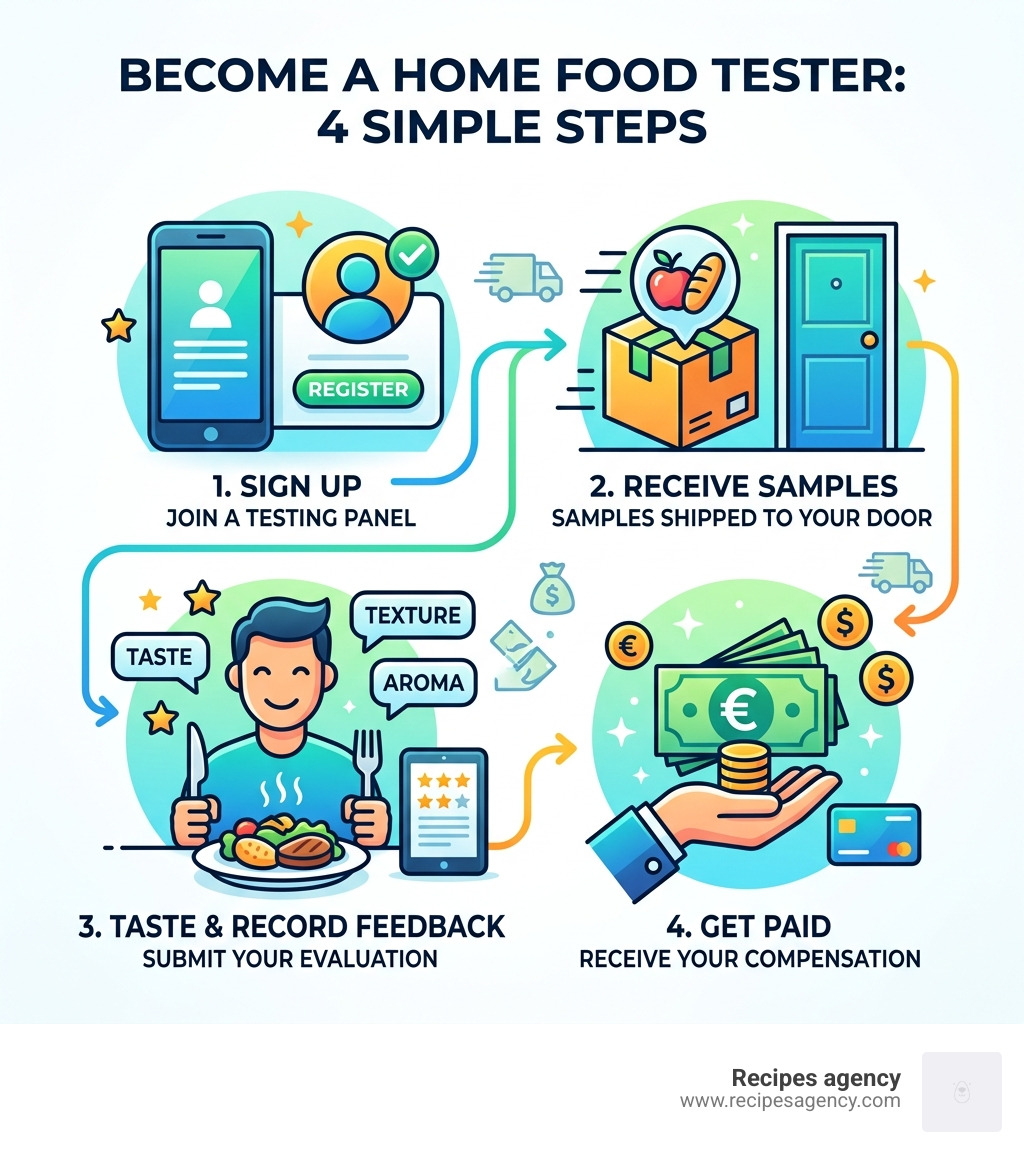
Here’s the quick version of how it works:
- Sign up with a food testing platform or panel
- Receive food samples shipped to your door (or pick them up locally)
- Taste and evaluate the products — flavor, texture, aroma, appearance
- Submit your feedback via survey or short video recording
- Get paid — typically €10–€20 per test, or $35–$100+ per session
Most testers participate in 1–3 tests per month, with no prior experience required.
Think about it: food brands can’t launch a new snack or drink without knowing if real people actually like it. That’s where you come in. Companies — from major flavor brands like McCormick to innovative startups — rely on everyday consumers to shape their products before they hit shelves.
The rise of remote work has made this even more accessible. You don’t need a lab coat or a culinary degree. You need a smartphone, an internet connection, and honest opinions.
Some testers earn up to $750 per week by participating in multiple studies. Others treat it as a low-key side hustle for free food and a little extra cash. Either way, it’s a flexible, no-experience-required role that fits around your life.
What Does a Food Product Tester at Home Actually Do?
When you work as a food product tester at home, you are essentially a sensory detective. Your mission is to help companies understand the human experience of eating their products. It’s not just about saying “this tastes good” or “this tastes bad.” Companies need a deep dive into the sensory profile of their innovations.

Get Paid to Taste: The Role of a Modern Food Product Tester
As a tester, you will be asked to evaluate several key factors:
- Flavor Profiles: Is the sweetness overpowering? Does the spice kick in too late? You’ll identify specific notes like saltiness, acidity, or bitterness.
- Texture Analysis: This is huge in the food industry. Is the cracker crunchy or merely hard? Is the yogurt creamy or grainy?
- Aroma: How does the product smell the moment you open the packaging? Does the scent match the flavor?
- Appearance: We eat with our eyes first. You’ll provide feedback on the color, shape, and even the packaging appeal of the item.
- Overall Appeal: Would you actually buy this at the grocery store? What price point feels fair for this quality?
The variety of items you might test is vast. You could be sampling the next viral spicy snack, a new plant-based beverage, a quick-prep frozen meal, or even high-end gourmet treats. Some programs, like the Consumer Testing | McCormick & Company initiative, focus specifically on how flavors and spices interact in everyday meals.
Essential Requirements for a Food Product Tester at Home
You don’t need a PhD in food science, but you do need some basic tools and traits to succeed:
- Technology: A smartphone with a working camera is usually mandatory. Many modern tests require you to record your “first taste” reaction. A tablet or computer with reliable internet is also necessary for filling out detailed surveys.
- Age and Location: Most programs require you to be at least 18 years old. While many opportunities are remote, some may require you to live in specific regions (like the US, UK, or Canada) for shipping purposes.
- A Discerning Palate: You don’t need to be a chef, but you do need to be able to distinguish between different tastes and textures.
- Attention to Detail: Following instructions is critical. If a test says “microwave for exactly 45 seconds,” doing it for 60 seconds could ruin the data.
- Honesty: Brands don’t want you to be nice; they want you to be honest. If a product is bland, they need to know that before they spend millions on a launch.
- Dietary Information: You’ll need to provide clear info on allergies and restrictions. This ensures you aren’t sent products that could harm you.
Privacy and Safety as a Food Product Tester at Home
One of the biggest questions we hear is: “Is it safe to record myself eating?” We take privacy seriously. Many modern platforms use AI facial masking technology. This means the software can track your micro-expressions (like a smile or a grimace) and anonymize your identity by blurring or masking your face before a human ever sees the video.
Furthermore, legitimate companies adhere to GDPR compliance and use bank-level data encryption to protect your personal information. Regarding food safety, samples sent to your home are typically shelf-stable or packaged with professional-grade cooling materials. You will always be required to sign a legal consent form that outlines the ingredients and any potential risks.
How to Qualify and Sign Up for Testing Programs
Getting started is a structured process designed to match the right food with the right person. Companies don’t just send steak to vegetarians or sugary snacks to people who don’t eat dessert.
- The Onboarding Survey: Your journey begins with a comprehensive profile. You’ll answer questions about your shopping habits, your favorite brands, and your household makeup.
- Profile Creation: Once registered, you’ll have a dashboard. This is where you’ll see available “screener” surveys.
- Demographic Matching: This is the secret sauce. Companies look for specific groups—for example, “moms aged 30-45 who buy organic snacks.”
- Qualification Surveys: When a project matches your profile, you’ll receive an email invitation to a qualification survey. Answer these quickly! Spots fill up fast.
- Confirmation: If you pass the screener, you’ll receive a confirmation email with instructions on when your samples will arrive or when your digital session begins.
At Recipes Agency, we believe that innovative flavor creation starts with diverse voices. By joining a research panel, you become part of the creative process that defines what the world eats next.
Compensation and Earnings: What to Expect
Let’s talk money. While being a food product tester at home is rarely a replacement for a full-time job, it is a fantastic way to earn extra cash or gift cards.
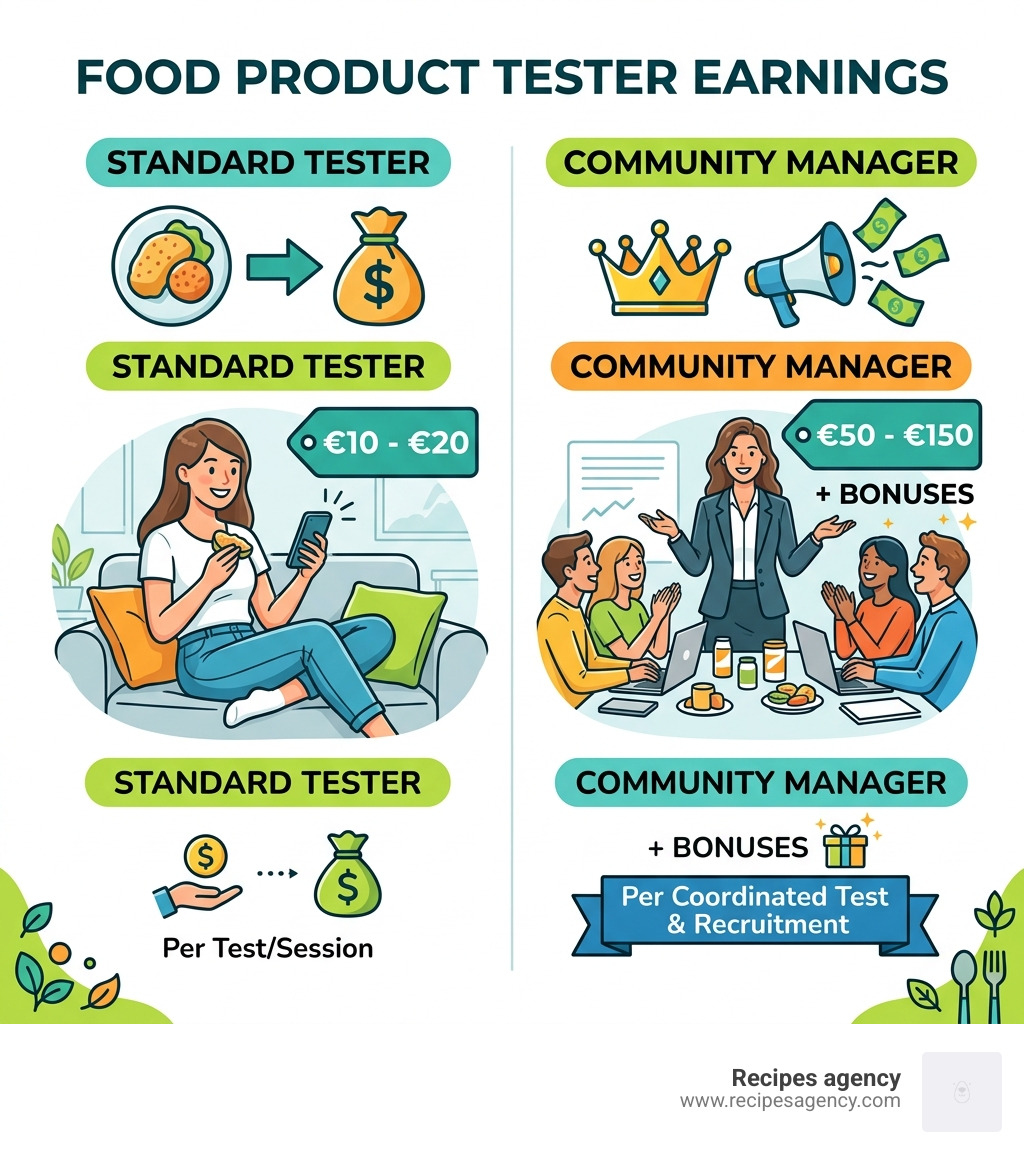
| Role Type | Typical Earnings | Frequency | Perks |
|---|---|---|---|
| Standard Tester | €10–€20 / $35–$40 per hour | 1–3 times per month | Free food, early access to products |
| Premium/Focus Group | $50–$150 per session | Occasional | Deep-dive discussions, higher pay |
| Community Manager | €50–€150 per coordinated test | Ongoing | Bonuses for recruiting others |
| High-Volume Reviewer | Up to $750 per week | Frequent | Potential for steady side-income |
Payment methods vary by platform. Most companies offer:
- Virtual Gift Cards: Amazon, Starbucks, or retail-specific cards (often processed within 48 hours).
- Direct Payments: Via PayPal or bank transfer (usually within 10 business days).
- Product Compensation: Sometimes the “pay” is simply the high-value food or kitchen gadget you get to keep.
For instance, Tasteocracy often pays around $40 per hour, while other specialized roles listed on Jobsearcher can reach that $750 per week mark for dedicated participants.
The Step-by-Step Process of At-Home Testing
Once you are selected for a study, the process usually follows a very specific rhythm.
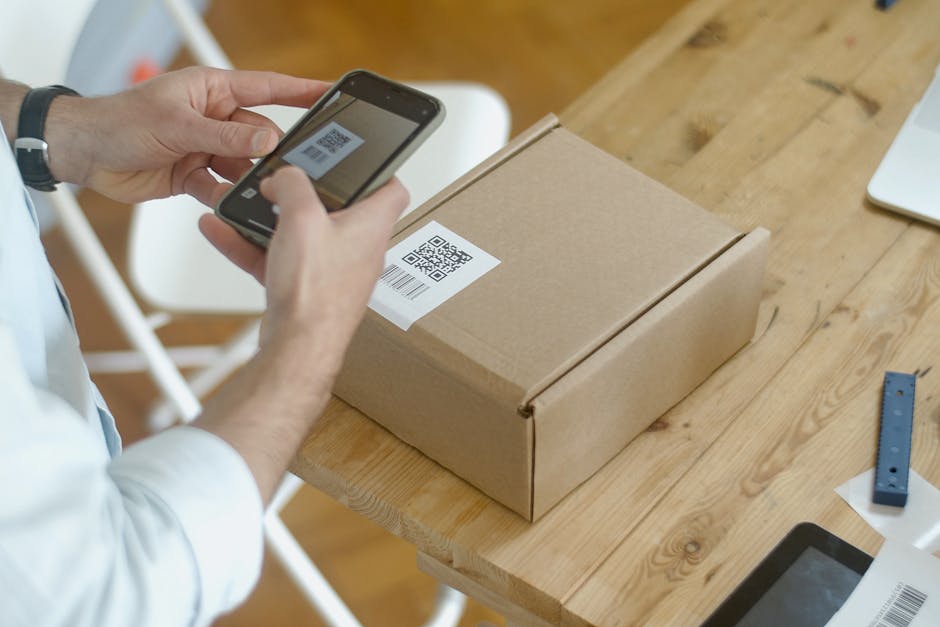
- Receiving Samples: A package arrives at your door. Inside, you’ll find the product (often in plain packaging to avoid brand bias) and a set of instructions.
- The QR Code: Most modern tests include a QR code. Scanning this with your phone opens the testing portal, where you’ll record your data.
- Preparation: Some items are “ready to eat,” while others might require boiling water or microwaving. Follow the instructions to the letter!
- The Tasting Session: You’ll be asked to take a bite (sometimes on camera) and describe your immediate reaction. Does the flavor change after five seconds? Is there an aftertaste?
- Video and Written Feedback: You might spend 30 to 60 minutes answering questions about the experience.
- Reward Processing: After you submit your feedback and it’s verified for quality, your payment is triggered. Many systems, like Tasteocracy, deliver rewards within 48 business hours.
Pros and Cons of Professional Taste Testing
Like any gig, being a food product tester at home has its ups and downs.
The Pros:
- Extreme Flexibility: You choose which tests to apply for and often complete them on your own time.
- Free Stuff: Who doesn’t love free snacks, meals, and beverages?
- Influence: There is a genuine thrill in seeing a product you tested on a grocery store shelf six months later.
- No Commute: You can do this in your pajamas (though maybe put on a clean shirt if you’re recording a video!).
The Cons:
- Inconsistent Income: You can’t always count on a set number of tests per month.
- Demographic “Disqualification”: It can be frustrating to fill out a screener only to be told you aren’t the right fit for that specific study.
- Waiting Periods: Many companies, such as McCormick, limit participation to once every three months (or every 60 days) to ensure they get fresh perspectives.
- Competitive Spots: High-paying tests can fill up within minutes of the email being sent.
Frequently Asked Questions about Food Testing
How often can I expect to receive testing opportunities?
This is the most common question. On average, most testers see 1 to 3 opportunities per month. This depends heavily on your demographic profile. If you live in a major metropolitan area or have a large household with children, you might see more. Remember the “cooldown” periods; many companies require a 60-day or 3-month wait between tests in the same category to keep their data unbiased.
Can children or pets participate in food testing programs?
Yes! In fact, these are some of the most popular tests. Parents can register their children (often age 5 and up) to test new juice boxes, snacks, or cereals. For pet lovers, you can update your profile to include your furry friends. Companies frequently test the “palatability” of dog and cat treats, and they need owners to report on how excited the pet was to receive the snack. Check out the Eatpol – Become a Food Tester page for various community-based opportunities.
What equipment do I need to participate in at-home testing?
At a minimum, you need a smartphone with a high-quality camera. Some studies may require a tablet or laptop for longer surveys. Beyond tech, you just need a clean, quiet space and basic kitchen tools (like a bowl, spoon, or microwave). You don’t need a professional studio, but good lighting helps the AI facial masking software work more accurately.
Conclusion
The world of food is changing, and brands are more desperate than ever for your “discerning palate.” Whether you’re looking for a fun side hustle or you want to be at the forefront of innovative flavor creation, becoming a food product tester at home is a rewarding path.
At Recipes Agency, we understand that every great flavor starts with a simple opinion. By sharing yours, you help shape the future of the grocery aisle. Ready to turn your snacks into stacks of cash?
Start your journey as a food tester today and join a community of foodies who are getting paid to do what they love most: eat! For more inspiration on the latest in the food world, you can also check out Food Product Tester: Stay at Home Jobs! to see how the industry is growing in April 2026.
